WHERE WE LEARNED THIS
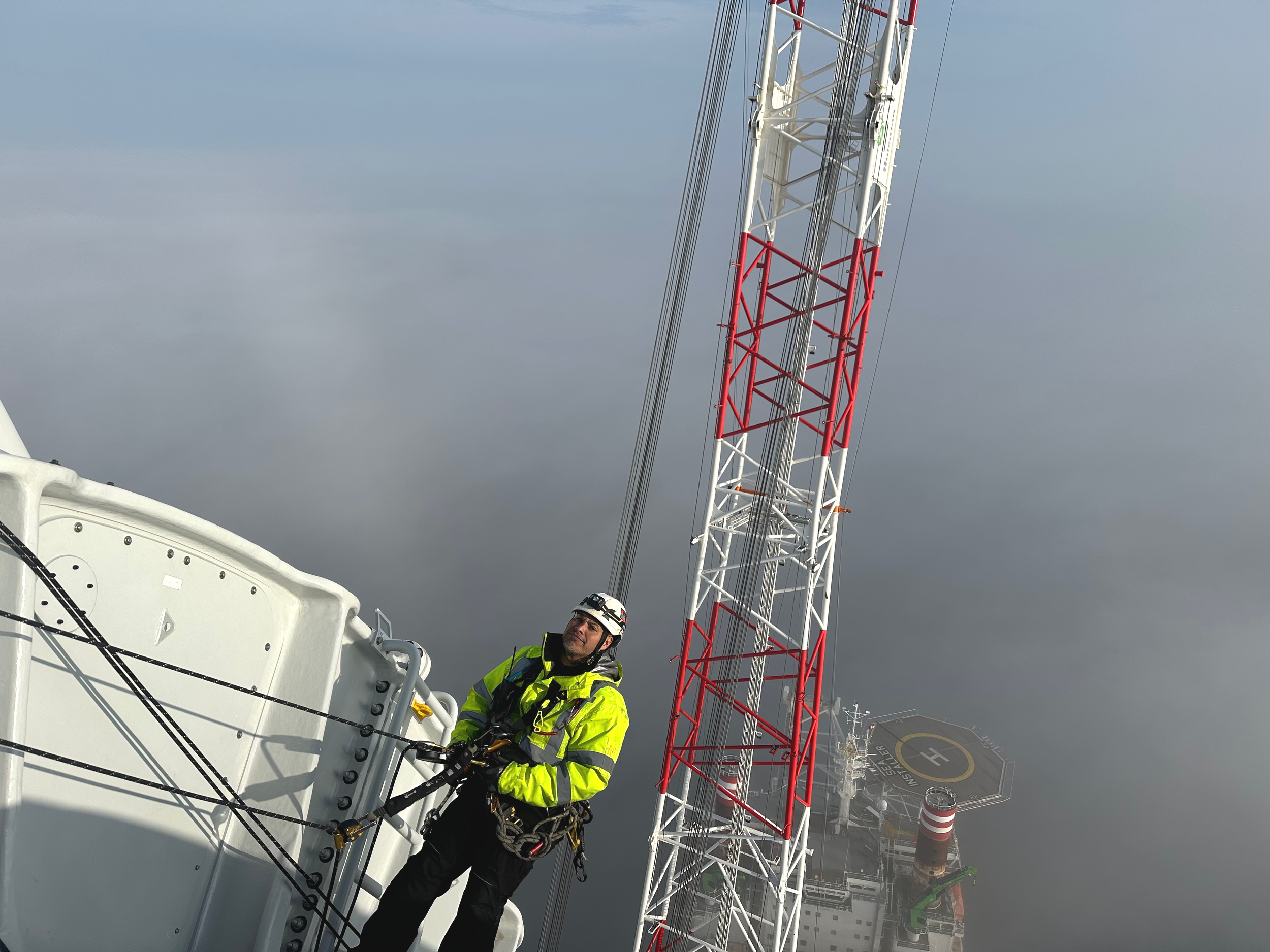
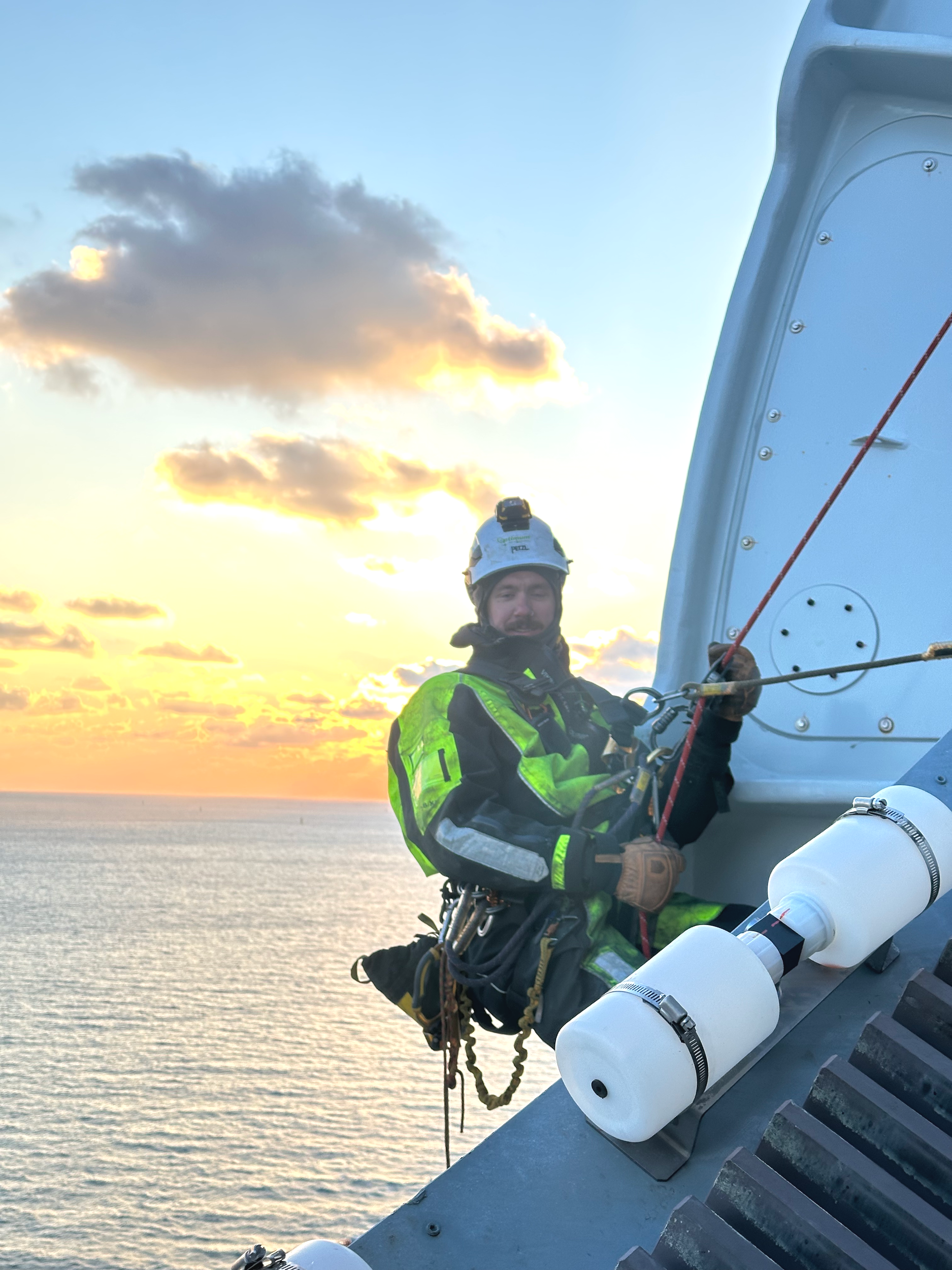
Vineyard Wind 1 sits about fifteen miles south of Martha’s Vineyard: 62 turbines, 804 megawatts, the first commercial utility-scale offshore wind farm in the United States. The machines are GE Haliade-X units — 13 megawatts each, a 722-foot rotor, blades 351 feet long, standing 853 feet from sea level to blade tip. Among the largest turbines ever assembled at the time, and nobody in this country had worked on anything like them before, because nothing like them existed here yet.
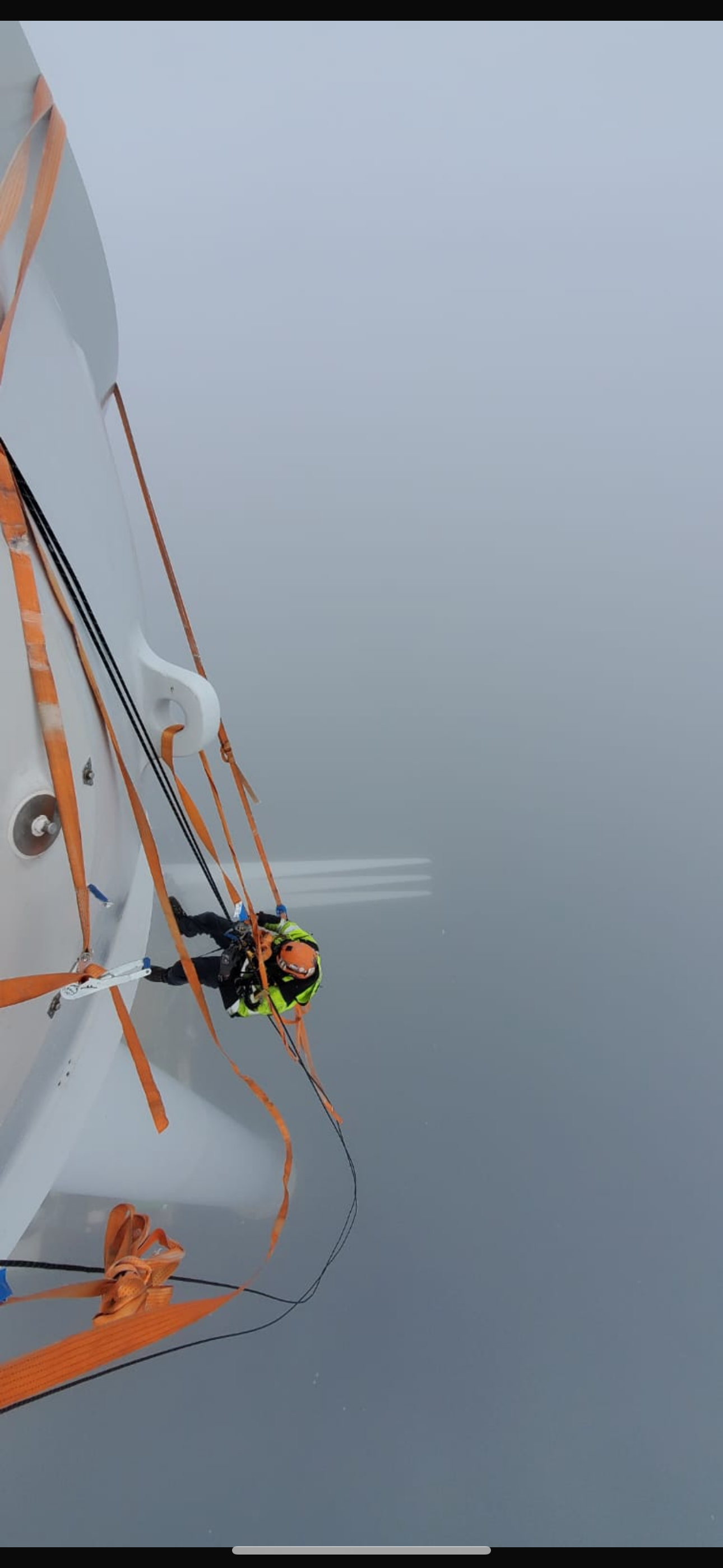
Jeff Pankow served as foreman of Rotation 2, Team 71 through the project’s completion, running the mechanical punch list rope access team. The work went wherever the punch list went: on blade, inside blade, inside tower. Rope access and confined space entry, frequently in the same shift, on machines nobody in this country had ever worked before.
When a blade failed in July 2024, our team worked the follow-up inspection campaign.
A 351-FOOT CONFINED SPACE, FIFTEEN MILES OFFSHORE
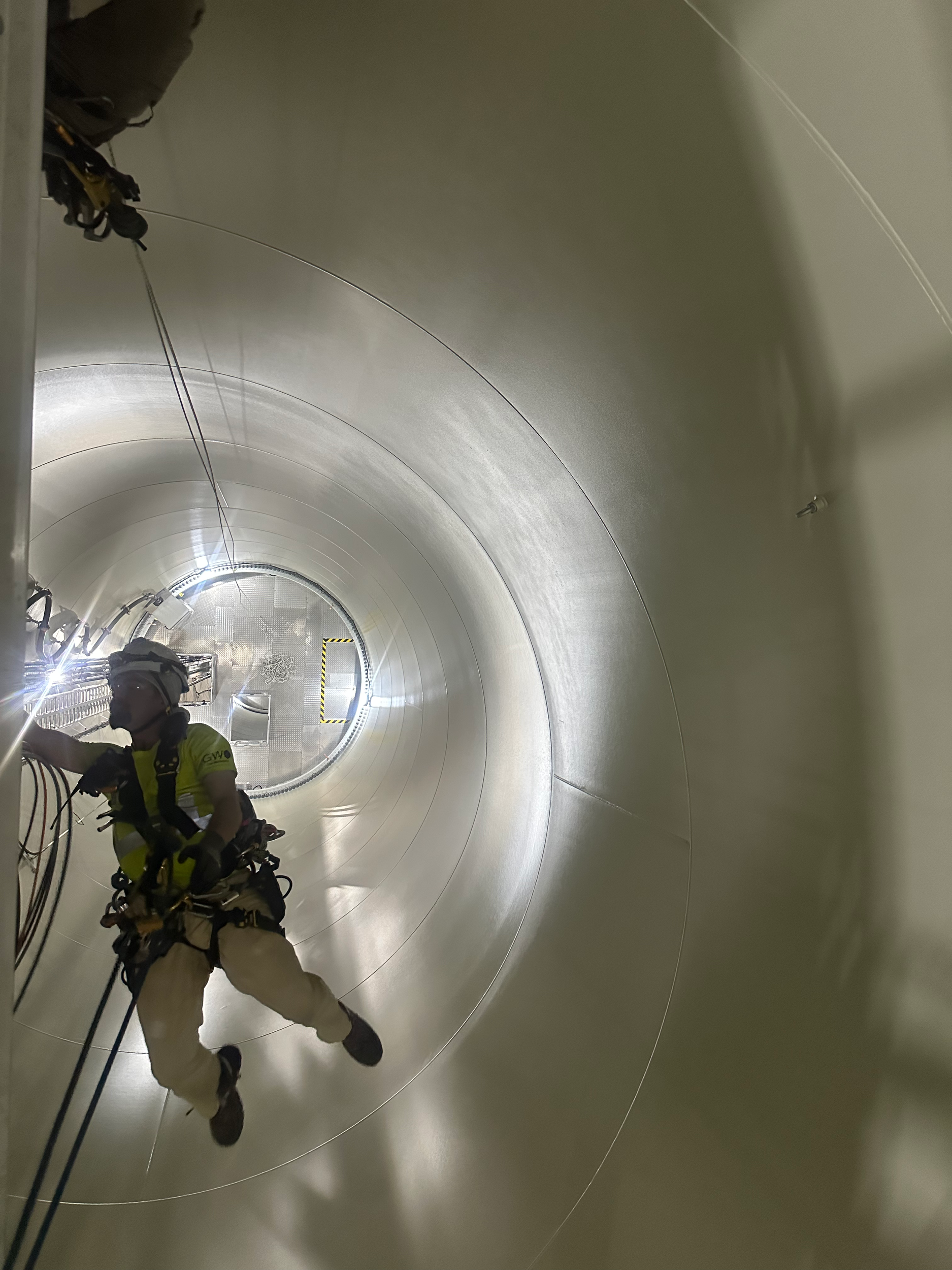
A wind turbine blade is a confined space by every definition that matters. One way in, at the root. No second exit. It narrows as you move outboard until there is no room to turn around, and nobody is reaching you quickly if something goes wrong. On these machines that space runs 351 feet to the tip, entered from a hub set between 358 and 472 feet above the sea. Add the tower below it and you have two distinct confined space problems stacked on top of a rope access problem.
That is the work we did on Vineyard Wind, shift after shift — and it is the same work we do now for Arizona operators, on tanks, vessels, silos and stacks. Different structure, identical discipline: a written entry plan, an attendant who does nothing else, monitoring that continues the whole time, and a rescue team standing by that can actually reach you.
We did not learn confined space rescue from a classroom. We learned it somewhere the classroom answer would not have been good enough.
WHAT OFFSHORE TEACHES YOU THAT ONSHORE DOESN’T
Working at height over open water changes what “prepared” means.
The weather closes your window without asking. The vessel transfer is its own hazard before you’ve touched a rope. Your team is the rescue team, because the nearest alternative is an hour away by boat in good conditions, and there are no good conditions on the day you need them. Every anchor, every system, every plan has to hold up without anyone coming to check your work.
That is the standard we brought back to Arizona. When we write an access work plan for a water tank in Mesa or a stack in Globe, it is built the way we built them offshore — because that is the only way we know how to build them, and because the discipline that keeps people alive fifteen miles out is the same discipline that keeps them alive fifty feet up.
EVERYONE ON THAT DECK LEARNED THE TRADE SOMEWHERE ELSE
Offshore wind crews are international by default. On a project like Vineyard Wind you work alongside technicians trained in half a dozen countries, certified under different schemes, carrying habits from whichever industry taught them to climb — oil and gas, mining, rockfall, salvage, commercial diving.
That does something useful to a technician. When the man next to you rigs a system differently and it works, you have to ask why yours is the way it is. Some of the answer turns out to be requirement. A lot of it turns out to be habit you inherited and never questioned. Working internationally is how you learn to tell those apart, and it is why we can explain the reason behind every method we use rather than simply insisting on it.
It sharpens how you communicate, too. When English is a second language for part of the crew, a vague brief is a hazard. You learn to say exactly what you mean, confirm it was understood, and never rely on someone filling in the gaps. That habit is worth more on an Arizona job site than any piece of equipment we own.
The practical benefit to you: when we look at an access problem, we are not drawing on one tradition. We have seen several, watched them succeed and fail in real conditions, and kept what works.
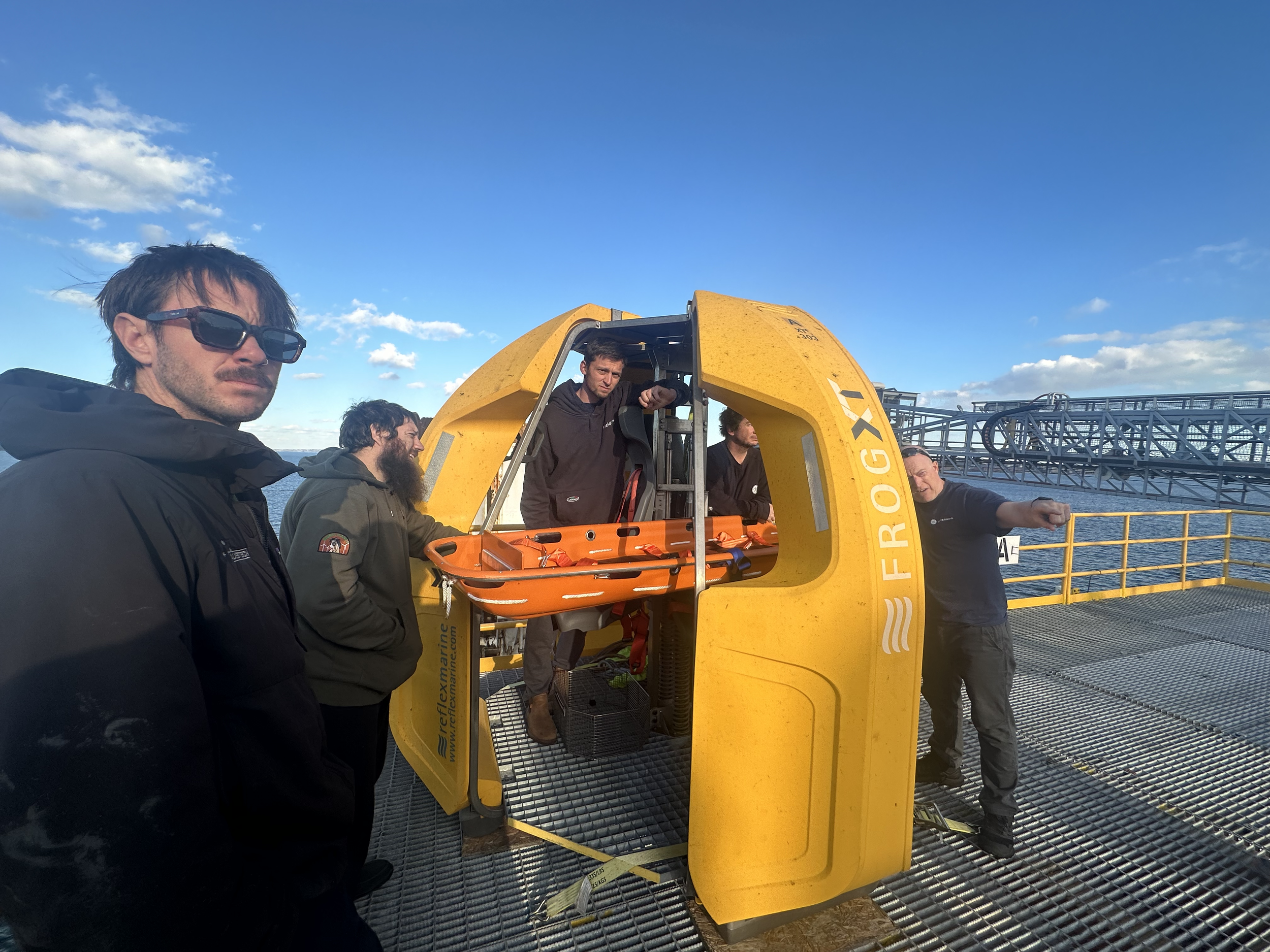
[ Customer Focused Solutions ]
Our teams draw from a wide range of experience across diverse environments and conditions. That diversity makes us adaptable and creative in solving complex problems. We apply what we've learned over thousands of hours in the field to build tailored rope access and rescue solutions for each customer's specific needs.